



Kava relaxes you, so using it to sleep seems like straightforward maths. The research says it depends entirely on why you're awake in the first place, and that turns out to be the most useful thing anyone can tell you about kava and sleep.
Kava can help you sleep, but mainly when anxiety is what's keeping you up. A four-week controlled trial found kava significantly improved sleep quality in people whose sleep was disrupted by anxiety.
Studies testing kava as a general sleep aid have been far less convincing, including a large internet-based trial where kava performed no better than placebo.
So kava treats the worry that blocks sleep rather than acting as a sedative, and if your insomnia isn't anxiety-driven, it probably isn't your answer.
Here's the evidence, the timing, and how it stacks up against melatonin and CBN.
Quick Takeaways
- Kava helps sleep mostly by easing the anxiety that keeps you awake.
- A four-week trial improved sleep quality in anxious patients specifically.
- Tested as a standalone sleep aid, kava has repeatedly failed to beat placebo.
- Take it 30 to 60 minutes before bed, since peak effects land 1 to 3 hours in.
- It generally doesn't cause next-day grogginess, unlike some sleep aids.
Does Kava Help You Sleep?

Conditionally, yes. Kava is good at removing a specific obstacle to sleep rather than producing sleep itself.
If you lie down and your brain immediately starts rehearsing tomorrow, cataloging today's mistakes and running worst-case scenarios, kava has something to offer.
It quiets that.
If you're wide awake for other reasons- a disrupted body clock, shift work, sleep apnoea, chronic insomnia with no obvious anxiety component- kava is a poor tool for the job.
That distinction runs through all the research, and it explains why studies on kava and sleep look contradictory until you notice who was in them.
What the Research Says About Kava and Sleep
The trials split cleanly along one line: whether the participants were anxious.
| Study | Population | Finding |
|---|---|---|
| WS 1490 multicentre RCT | Sleep disturbance with anxiety disorders | Significant improvement in sleep quality over 4 weeks |
| Jacobs 2005 internet RCT | General anxiety and insomnia, 1,551 recruited | Kava no better than placebo |
| Systematic reviews | Kava as standalone sleep treatment | No meaningful effect on insomnia severity or sleep efficiency |
The positive result is real.
A multicentre, randomized, placebo-controlled, double-blind trial of a standardized kava extract found significant improvements in sleep quality and in how recuperative that sleep felt, across four weeks.
Read the population though: those participants had sleep disturbances associated with non-psychotic anxiety disorders. Kava treated the anxiety and sleep improved downstream.
The negative trial is just as important
In 2005, researchers ran a randomized, double-blind, placebo-controlled trial entirely over the internet, recruiting 1,551 people across 45 states to test kava for anxiety and valerian for sleep.
Neither beat placebo. Kava produced no greater reduction in anxiety than the dummy pill, and on some measures placebo edged ahead. It's a large study with an unusual design, and it's a genuine mark against kava as a broad self-treatment for sleeplessness.
Reviews looking at kava as a standalone sleep treatment reach similar conclusions, reporting no meaningful differences in insomnia severity, sleep efficiency or next-day functioning.
Any page telling you kava is a proven sleep aid hasn't read past the first result.
Why Kava Works for Anxiety-Driven Sleep Problems

Because it targets the cause rather than forcing the outcome.
Kavalactones enhance GABA-A activity, block sodium and calcium channels, and quieten mental overactivity. For someone whose sleep problem is essentially a mind that won't stop, that's precisely the right intervention.
Reduce the arousal and sleep tends to follow on its own.
What kava doesn't do is act like a sedative that overrides your system. It won't knock you out, it won't force sleep onto a body that isn't ready, and it won't fix a circadian rhythm that's drifted.
That's a limitation for pure insomnia, but it's also why kava doesn't leave you feeling drugged.
When Kava Won't Help Your Sleep
Being clear about this saves you money and a few disappointing nights.
Kava may help if
- A racing mind keeps you awake
- Stress spikes at bedtime
- You wake up worrying at 3 am
- Sunday nights are your worst
- You can use it consistently for weeks
Look elsewhere if
- Your body clock is the problem
- You work shifts or have jet lag
- You have chronic insomnia without anxiety
- You suspect sleep apnoea
- You need something that works tonight
Jet lag and shift work are body-clock problems, and melatonin is the better-matched tool. Suspected sleep apnoea needs a doctor, not a supplement.
Chronic insomnia has an actual first-line treatment, cognitive behavioral therapy for insomnia, with a stronger evidence base than any botanical.
Kava vs Melatonin vs CBN for Sleep
Three popular options that solve genuinely different problems.
| Best for | How it works | Watch for | |
|---|---|---|---|
| Kava | Anxiety-driven sleeplessness | Calms mental arousal via GABA | Liver caution, takes weeks |
| Melatonin | Body-clock problems, jet lag | Signals your system it's night | Grogginess, vivid dreams |
| CBN | Staying asleep, general wind-down | Sedating cannabinoid, often with CBD | Less studied than CBD |
If your sleep problem is a busy head, kava and CBD-based options both address the cause. If it's timing, melatonin is the right lever.
Plenty of people find a CBD and CBN combination the easier nightly option, since it doesn't carry kava's liver considerations or its four-to-eight week ramp.
How to Use Kava for Sleep
Timing matters as much as the amount.
- Take it 30 to 60 minutes before bed. Onset is 15 to 30 minutes, but peak blood levels arrive 1 to 3 hours in, so earlier beats later.
- Dose by kavalactones. Stay within the researched range rather than escalating because sleep didn't arrive. See our guide to kava dosage.
- Take it on a lightish stomach. Food significantly reduces kavalactone absorption, so a heavy dinner blunts the dose.
- Use noble root. Tudei kava lingers far longer and is more likely to leave you heavy the next morning.
- Give it a couple of weeks. The anxiety benefit builds with consistent use, and so does the knock-on effect for sleep.
- Pair it with the boring stuff. Consistent wake time, no screens late, a genuine wind-down. Kava works best alongside sleep hygiene, not instead of it.
Does Kava Cause Next-Day Grogginess?
Usually not, which is one of its better qualities as an evening option.
Because kava isn't a heavy sedative, most people wake up clear rather than fogged. That compares well with antihistamine sleep aids and with melatonin, both of which commonly leave people groggy.
Two exceptions. Very heavy doses can carry over into the morning, and low-quality or tudei kava is notorious for a lingering heaviness that can last well into the next day. Both are avoidable with sensible dosing and decent product.
Never combine kava with other sleep aids
Don't take kava with alcohol, benzodiazepines, prescription sleep medication, or other sedatives. The effects stack unpredictably, and combining kava with alcohol is specifically advised against for liver reasons.
If you take any prescribed sleep or anxiety medication, speak to your doctor before adding kava.
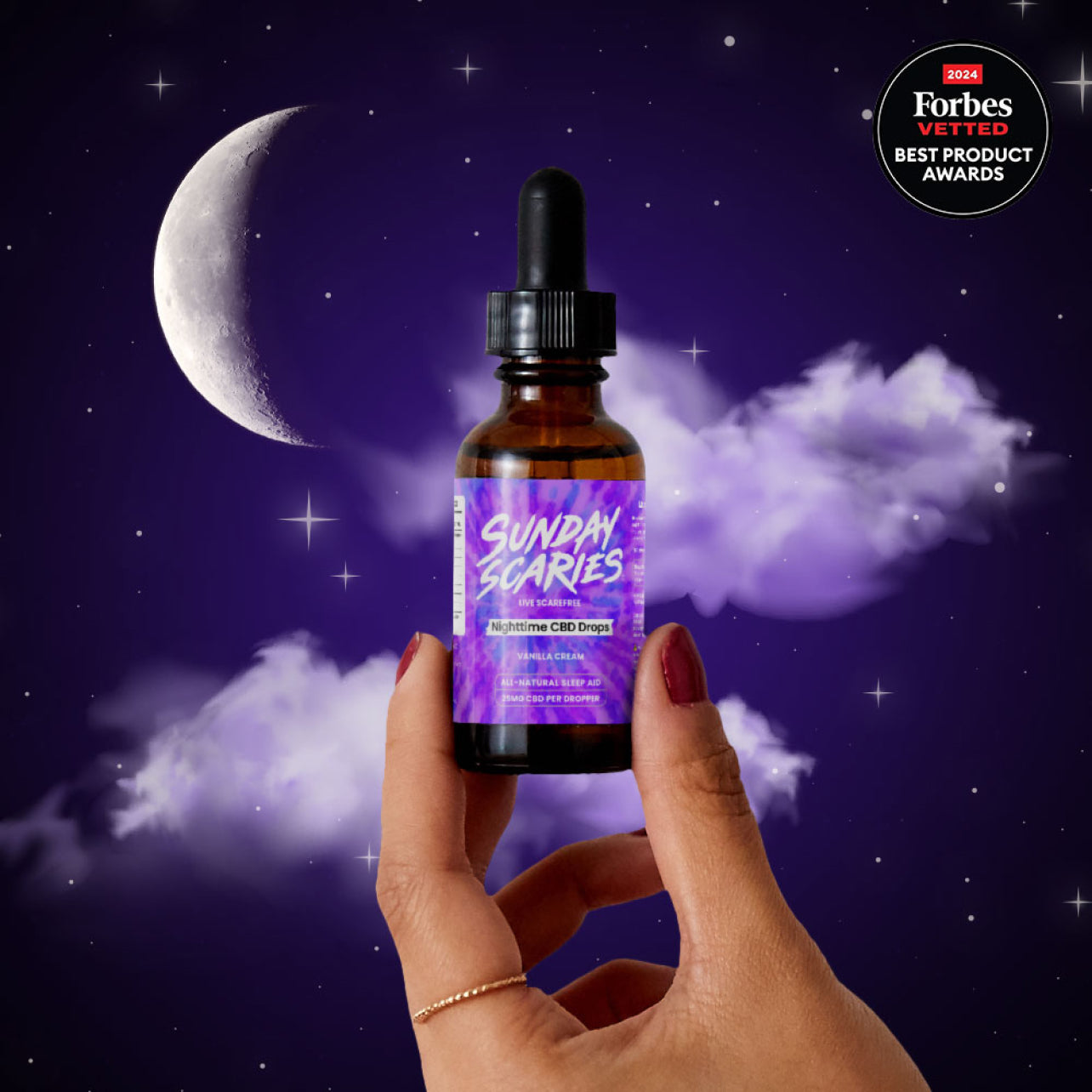
Available tonight, no liver maths
CBD Oil for Sleep
If it's a racing mind keeping you up, this is the simpler route. Full-spectrum CBD with CBN and calming botanicals, melatonin-free so you wake up clear rather than groggy.
Shop CBD Oil for Sleep Backed by our 100% money-back guarantee.Sunday Scaries Kava Gummies, landing soon
Pre-dosed kava with the kavalactone content stated on the label, so you know exactly what you're taking. Get on the list for launch.
Kava for Sleep: The Bottom Line
Kava helps sleep when anxiety is the reason you're awake, and struggles when it isn't.
The trial that found real improvement studied people whose sleep was disrupted by anxiety, while a large internet-based study of general anxiety and insomnia found kava no better than placebo.
Take it 30 to 60 minutes before bed, dose by kavalactones, use noble root, and give it a few weeks.
If your problem is a body clock, a breathing issue, or long-standing insomnia, kava is probably the wrong tool, and something else will serve you better.
Frequently Asked Questions
Does kava help you sleep?
It can, mainly when anxiety is keeping you awake. A four-week trial improved sleep quality in anxious patients, but kava tested as a general sleep aid has not consistently beaten placebo.
When should I take kava for sleep?
About 30 to 60 minutes before bed. Onset is 15 to 30 minutes, but peak effects arrive one to three hours after your dose, so taking it earlier in your wind-down works better.
Is kava better than melatonin for sleep?
They solve different problems. Melatonin addresses body-clock issues like jet lag and shift work. Kava addresses the anxiety and mental overactivity that prevent sleep. Neither fixes the other's problem.
Will kava make me groggy in the morning?
Usually not, since it isn't a heavy sedative. Very large doses or poor-quality tudei kava can leave next-day heaviness, but sensible dosing with noble root generally avoids it.
How much kava should I take for sleep?
Stay within the researched range of roughly 120 to 280mg of kavalactones daily and start lower. Escalating the dose because sleep hasn't arrived is the most common mistake.
Can I take kava with melatonin or other sleep aids?
Not without medical advice. Kava shouldn't be combined with sedatives, sleep medication or alcohol, since effects stack unpredictably and there are liver considerations.
How long before kava improves my sleep?
You'll feel relaxed the first night, but the anxiety benefit that drives better sleep builds over several weeks of consistent use. Judge it after a few weeks, not one night.
Quiet the mind, get the sleep.
Our Forbes-awarded CBD Oil for Sleep pairs CBD with CBN to help you drift off in 20 to 30 minutes, backed by a 100% money-back guarantee.
Shop CBD Oil for SleepThese statements have not been evaluated by the Food and Drug Administration. This product is not intended to diagnose, treat, cure, or prevent any disease. This article is general information, not medical advice, and kava is not a treatment for any sleep disorder. Kava has been linked to rare cases of liver injury and should not be combined with alcohol or sedatives. If sleep problems are persistent, please speak to a qualified healthcare professional.