



Lion’s Mane Side Effects: Is It Safe to Take Daily?
Quick Takeaways
- For people, lion’s mane is tolerated well and rarely causes any side effects.
- With that said, some users complain of digestive symptoms, which is usual and nothing alarming.
- A lion’s mane allergy is very uncommon, but it’s still possible to experience an allergic and/or hypersensitivity reaction.
- There is no evidence to link Lion’s mane to any damage to the liver cells.
- For this reason, it is absolutely vital to read the label thoroughly.
Lion’s mane looks like a tiny white pom-pom that has become a very popular functional mushroom.
Lion’s mane is available in powders, capsules, coffees, and gummies with the purpose of supporting focus, memory, and mental clarity. We have some really promising early studies, but more research is needed.
However, it’s as important to talk about the side effects of Lion’s mane as it is to cover its benefits. For people, lion’s mane is tolerated well and rarely causes any side effects. With that said, some users complain of digestive symptoms, which is usual and nothing alarming.
In this article, we will dig deep into the research that covers the side effects of Lion’s mane, and what to do in case you develop any undesirable symptoms.
Is Lion’s Mane Mushroom Safe?
Lion’s mane is an edible mushroom that has been used as food for centuries.
The NIH LiverTox review tells us that lion’s mane is generally safe. We don’t have any evidence to link the consumption of Lion’s mane with elevated enzymes of the liver. In simpler terms, there is no proof that Lion’s mane causes liver injury.
The same review states that only 1 in 10 people who took this mushroom for a long time experienced digestive symptoms (e.g., abdominal discomfort, nausea, diarrhea).
We also have the Memorial Sloan Kettering Cancer Center that lists abdominal discomfort, nausea, and skin rash as possible lion’s mane side effects.
What Are the Most Common Lion’s Mane Side Effects?
1. Digestive Discomfort
Stomach-related symptoms are perhaps the most commonly reported side effects of Lion’s mane.
In a double-blind clinical trial, researchers observed mild abdominal discomfort and diarrhea in adults with mild cognitive impairment who took 3 grams of powdered lion’s mane each day for 16 weeks.
Remember that the degree of discomfort is proportional to the initial dose you take. Therefore, a higher dose at the beginning may increase your risk of abdominal pain. The same applies to taking the supplement on an empty stomach.
2. Nausea
Nausea is the second most common symptom that people report when they take Lion’s mushroom.
A 2020 clinical study examined an erinacine A-enriched lion’s mane in adults with mild Alzheimer’s disease. Four participants left the study because of abdominal discomfort, nausea, and skin rash.
Obviously, the study doesn’t mean taking Lion’s mane equals feeling nauseous. It just tells us that nausea is a side effect to be expected and shouldn’t trigger any fear.
3. Skin Rash
Skin rash is actually the least common side effect of Lion’s mane among what we discussed so far. However, you shouldn’t neglect this symptom, especially if you noticed other symptoms, such as itching, redness, and swelling.
Can You Be Allergic to Lion’s Mane?
A lion’s mane allergy is very uncommon, but it’s still possible to experience an allergic and/or hypersensitivity reaction.
In one case report, researchers described a severe respiratory reaction in a 63-year-old man who had used a lion’s mane extract for several months. Of course, we can’t draw a conclusion based on a single case report. In fact, we can’t even tell how common this side effect is.
The takeaway message is to avoid Lion’s mane if you have previously been diagnosed with a mushroom allergy.
Does Lion’s Mane Affect the Liver?
There is no evidence to link Lion’s mane to any damage to the liver cells. The NIH LiverTox review gives lion’s mane a score of E. This means the mushroom is very unlikely to cause any apparent liver injury.
Remember, we’re talking about Lion’s mane here. The supplement product actually contains several other ingredients, including mushrooms, herbs, caffeine, artificial sweeteners, and other ingredients.
Can Lion’s Mane Interact With Medication?
Unfortunately, we don’t have enough evidence to discuss pharmacological interactions between Lion’s mane and medications. The National Center for Complementary and Integrative Health explains that supplements can increase, decrease, or alter the effects of medications.
We recommend that you talk to your doctor before you use Lion’s mane if you:
- Take prescription medications.
- Are going through cancer treatment.
- Take medication that affects your immune system.
- Manage a chronic health condition.
- Are pregnant or breastfeeding.
- Plan to combine lion’s mane with several other supplements.
Does Lion’s Mane Make You High?
We understand that people associate the term mushroom with being high, especially with the rise of psychedelic mushrooms. However, Lion’s mane is a non-psychoactive functional mushroom. It does not contain psilocybin, which means it won’t cause any hallucinations.
To better understand these differences, read our guide on what mushroom gummies are.
How to Reduce the Risk of Lion’s Mane Side Effects
There are a few meaningful steps that lower the risk of side effects, so make sure to:
- Follow the serving size on the label.
- Start with the lowest recommended serving.
- Avoid taking several new supplements on the same day.
- Take the product with food if it irritates your stomach.
- Read the full ingredient list.
- Choose a transparent product from a reputable manufacturer.
- Stop the use of the supplement if you experience persistent symptoms.
Browse the Sunday Scaries functional mushroom gummies collection to get the supplement that meets your needs.
What Else Is in Your Lion’s Mane Supplement?
As we said before, Lion’s mane may not be the only ingredient in your supplement.
Featured Focus Formula
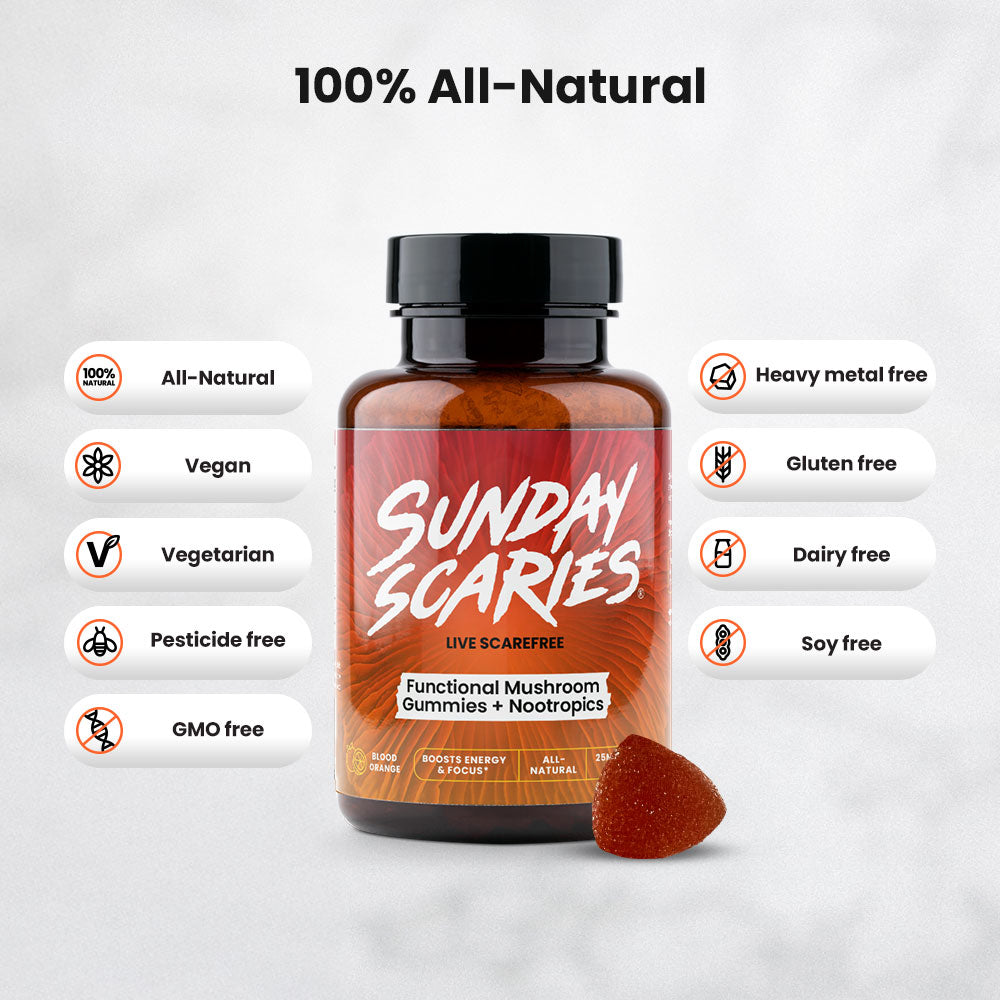
100mg Lion’s Mane Extract 100mg Chaga Powder Ginkgo Biloba Natural CaffeineFor example, Sunday Scaries Mushroom Gummies for Focus contains organic Lion’s mane extract with chaga powder, ginkgo biloba extract, and natural caffeine. So, if you feel a bit jittery after you take a focus gummy, it may be due to the caffeine and not Lion’s mane.
Shop Mushroom Gummies for Focus Third-party tested for purity and accurate dosingFor this reason, it is absolutely vital to read the label thoroughly.
Related: Lion’s mane mushroom benefits
Let’s summarize the side effects of Lion’s mane in a table:
| Side Effect | What to Do |
|---|---|
| Abdominal discomfort | Reduce the dose and take the supplement with food. You should stop taking the supplement if the symptoms do not improve. |
| Nausea | Stop taking the supplement if nausea persists. |
| Diarrhoea | Drink plenty of water to restore the lost fluids. If your symptoms don’t improve, stop taking the supplement. |
| Skin rash | You should stop taking the supplement as soon as you see a widespread rash. It’s also recommended to report it to your doctor. |
| Allergic reaction | If you develop breathing difficulty or facial swelling, head to the nearest emergency department. |
| Side effects from other ingredients | Read the full label and make sure you’re not allergic to any ingredient on the list. |
FAQs About Lion’s Mane Side Effects
1. Can lion’s mane upset your stomach?
Mild abdominal discomfort, nausea, and diarrhoea are all to be expected in some rare cases when you take Lion’s mane mushroom.
2. Can lion’s mane cause a rash?
Skin rash is a rare side effect of Lion’s mane. If you develop this symptom, stop taking the supplement and speak with your doctor.
3. Can you take lion’s mane every day?
Lion’s mane supplements are mostly taken on a daily basis. The human studies have examined regular use over several weeks and found no side effects.
4. Does lion’s mane damage the liver?
Lion’s mane has not been linked to liver damage. The quality of the product and the other ingredients found in the supplement are still important, however. We recommend that you choose a transparent formula from a reputable manufacturer.
5. Who should avoid lion’s mane?
People with known mushroom allergies should avoid Lion’s mane. Those who take medications, deal with an ailment, or receive cancer treatment should also refrain from taking the supplement until they speak with their doctors.
Explore Functional Mushroom Gummies
Browse clearly labelled formulas and find a functional mushroom gummy that suits your routine.
Browse Mushroom GummiesThis article is for informational purposes only and is not intended to provide medical advice, diagnosis, or treatment. Stop using a supplement and seek urgent medical attention if you experience breathing difficulty, facial swelling, or another sign of a severe allergic reaction. Speak with a qualified healthcare professional before taking lion’s mane if you use medication, manage a health condition, are pregnant or breastfeeding, have a mushroom allergy, or are receiving cancer treatment.