



Nootropic Mushrooms: Can Functional Mushrooms Really Boost Focus?
Quick Takeaways
- Nootropic mushrooms are functional mushrooms that may support focus, energy, memory, and mental clarity.
- Popular examples include lion’s mane, cordyceps, chaga, reishi, and shiitake.
- These mushrooms are not psychedelic and do not contain psilocybin.
- The evidence is promising, but most benefits are subtle and depend on consistency over time.
- Nootropic mushrooms work best as part of a healthy routine that includes sleep, good nutrition, hydration, and regular exercise.
Nootropic mushrooms have gained some massive traction over the past few decades. There are claims that these mushrooms promote focus, memory, energy levels, and mental clarity.
Before we delve any deeper, we first need to define nootropic mushrooms. These are all the mushrooms that have been proven to promote energy, focus, and cognitive function. Some examples of nootropic mushrooms include Lion’s mane, Reishi, Chaga, and Cordyceps.
However, it’s very important to remember that functional mushrooms are not magic mushrooms. These compounds don’t contain psilocybin, which is the main substance that triggers hallucinations. Functional mushrooms contain compounds such as beta-glucans, polysaccharides, triterpenes, hericenones, erinacines, and antioxidants. All of these substances have some solid evidence about their health benefits.
If you are interested in learning more about functional mushrooms, click here to read our guide.
Now that we understand what nootropics are, let’s go over the most popular ones:
1. Lion’s Mane
Lion’s mane (i.e., Hericium erinaceus) is the mushroom most people mean when they talk about nootropic mushrooms. Lion’s mane contains bioactive compounds such as hericenones and erinacines, which are interesting because researchers have studied their relationship with nerve growth factors, oxidative stress, inflammation, and nerve-cell protection.
A 2023 study on the neurotrophic and neuroprotective effects of lion’s mane concluded that lion’s mane has the potential to stimulate nerve growth factor release, regulate inflammatory processes, neutralize oxidative stress, and protect nerve cells from apoptosis.
This does not mean that Lion’s mane will turn your brain into a productivity machine by tomorrow. It just means the mushroom has demonstrated some positive signs on cognition.
Related – The top 10 Benefits of Lion’s Mane
2. Cordyceps: The Energy Mushroom
Cordyceps is not always described as a nootropic. However, it’s still known for its focus and performance-boosting properties.
One thing to consider is that your cognitive performance doesn’t solely rely on the chemistry of your brain. For example, if you are tired or sleep-deprived, your focus will drop sharply.
This is where cordyceps come in. It’s been studied to boost energy, exercise tolerance, and rate of oxygen use.
All in all, Cordyceps is a good energy-support mushroom, but doesn’t guarantee you a brain boost. We recommend that you take this mushroom whenever you feel like your energy levels have dropped and dragged down your focus.
3. Chaga: The Antioxidant Mushroom
Chaga is a dark and rugged mushroom that grows mostly on birch trees in cold climates.
It is mostly discussed for its antioxidative properties because it contains polysaccharides, phenolic compounds, and a few other bioactive ingredients. A 2023 review titled “Therapeutic properties of Inonotus obliquus” found that chaga does what’s called “scavenging” of the free radicals that usually destroy the cells.
Although this doesn’t directly exert nootropic effects, it still boosts your cognition indirectly. Oxidative stress and low-grade inflammation are the number one enemy of any organ, including your brain. If these processes become chronic, they wreak havoc on your brain’s function. Therefore, the positive effects of Chaga in neutralizing oxidative stress and inflammation will boost your brain’s function.
The most important thing is to keep in mind the quality of the production of this mushroom. A 2025 study on chaga dietary supplements expressed concerns around authenticity, mislabeling, and quality control of some products.
The conclusion is that chaga is very interesting for brain function. However, you must search for a trustworthy product.
4. Reishi: The Calm Mushroom
Reishi (i.e., Ganoderma lucidum) is used to promote calmness, balance, and recovery.
So, Reishi mostly acts as an anxiolytic substance that reduces stress, which can be very effective if we consider that stress is a concentration killer.
A randomized, double-blind, placebo-controlled study tested a Ganoderma lucidum polysaccharide extract in people with neurasthenia. The latter is a condition that presents fatigue, irritability, headaches, and stress-related symptoms. The researchers found that participants who took chaga had improved symptoms compared to the placebo group after 8 weeks of intake.
Another study in women with fibromyalgia looked at some parameters such as happiness, depression, life satisfaction, and health-related quality of life. They found that women who took chaga scored better in these parameters.
5. Shiitake: Not a Nootropic, But Still Useful
Perhaps you heard people refer to shiitake as a food mushroom and not a nootropic mushroom. Although this is partially true, shiitake can still be beneficial for cognition because it contains beta-glucans (e.g., lentinan). A study on lentinan and beta-glucan from shiitake mushroom highlights the immunomodulatory effects of shiitake.
These findings make shiitake more useful as a wellness supplement, but it still supports general wellbeing, which is indispensable for cognition.
How to Use Nootropic Mushrooms in a Real-Life Routine
The main thing to keep in mind to benefit from nootropic mushrooms is to be consistent. These supplements are not designed to give you one dramatic effect. You will most likely start to notice the difference after taking the supplements for at least a few weeks.
Let’s go over how a simple routine of nootropic mushrooms would look:
| Goal | Best Timing | Mushroom |
|---|---|---|
| Morning focus | Morning or early afternoon. | Lion’s Mane. |
| Workout energy | Before training. | Cordyceps. |
| Stress-heavy workday | Earlier in the day or evening. | Reishi. |
| General wellness | Any consistent time. | Chaga or shiitake. |
| Daily support | Same time each day. | Pre-dose gummies or capsules. |
What to Pair with Nootropic Mushrooms
Nootropic mushrooms benefit you more when the rest of your routine is also healthy.
We recommend that you pair these supplements with good sleep hygiene, proper hydration, regular exercise, and balanced meals. We fully understand how generic and boring this may sound, but the reason you’ve been reading these tips for the past decades is that they actually work! There is no mushroom that can fully compensate for a sleep-deprived brain that’s functioning on caffeine and protein bars.
It’s also very important to carefully read the label to fully understand which effect is attributed to which substance. You see, some nootropic supplements also contain caffeine, ginkgo biloba, and functional botanicals, which all exert different functions.
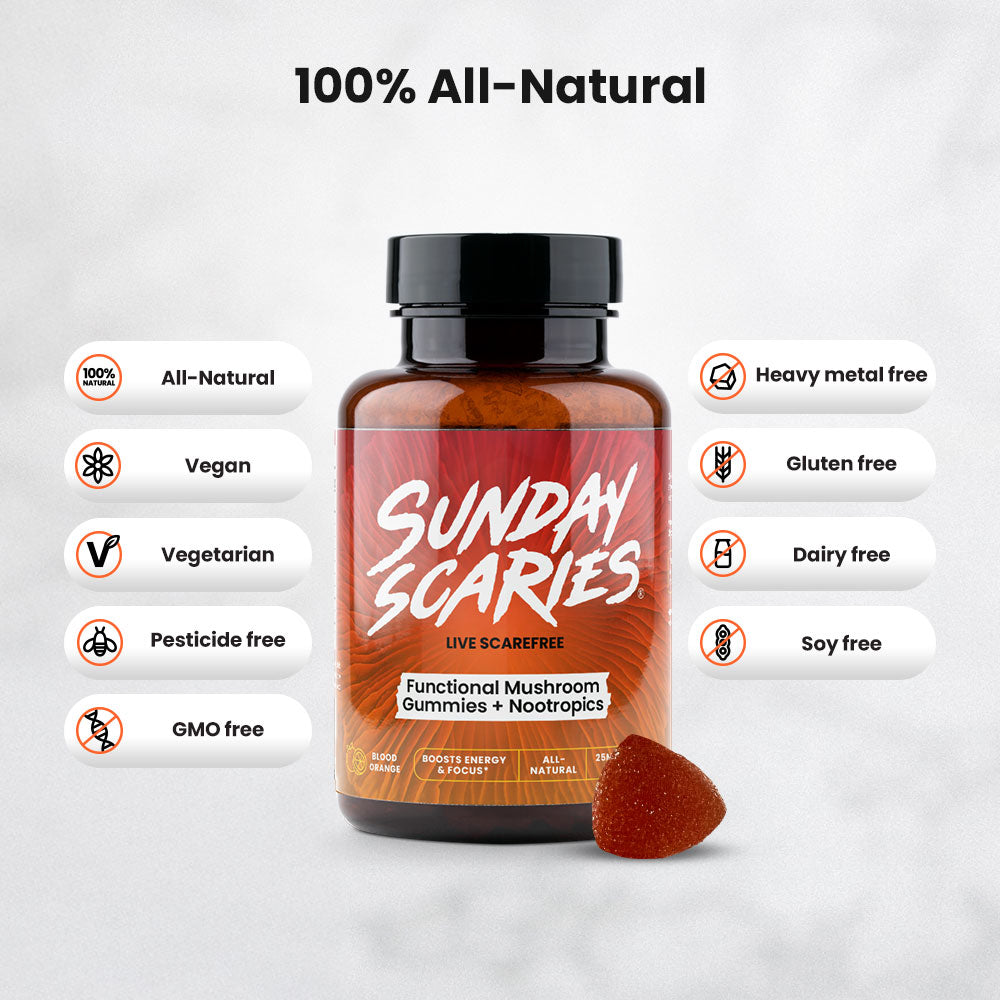
Featured Focus Formula
Lion’s Mane Chaga Ginkgo Biloba Natural CaffeineSunday Scaries Mushroom Gummies for Focus offer a simple, pre-dosed format for people who want a functional mushroom routine without dealing with powders or measuring scoops. Always check the full label to understand the complete formula.
Shop Mushroom Gummies for Focus Third-party tested for purity and accurate dosingBefore You Start Stacking Mushrooms
A mushroom stack is when a product combines several functional mushrooms or pairs mushrooms with other ingredients such as caffeine, herbs, and adaptogens.
It’s possible for stacking to become beneficial. However, more ingredients don’t always equal better results.
Before you use a nootropic mushroom stack, here’s what to check:
- Which mushrooms are included?
- How much of each ingredient you get per serving?
- Does the product contain caffeine?
- Does the product contain herbs that may interact with medications?
- Does the brand use third-party testing?
- Do the claims sound realistic?
If you are pregnant, breastfeeding, allergic to mushrooms, or have a chronic disease that requires medication, you should speak with your doctor before you take a nootropic mushroom or any other supplement for that matter.
Browse the Sunday Scaries mushroom gummies collection to choose a format that actually fits your day.
FAQs About Nootropic Mushrooms
Do nootropic mushrooms make you high?
Functional nootropic mushrooms do not trigger hallucinations because they do not contain psilocybin.
What is the best nootropic mushroom?
Lion’s mane is the most researched nootropic mushroom out there, as it exerts a direct effect on cognitive function.
Can I take nootropic mushrooms with coffee?
Yes, but it’s best to check the label. This is because some mushroom supplements may already contain caffeine, so you could experience some jitters if you also drink coffee/tea.
How long do nootropic mushrooms take to work?
Some people notice subtle effects quickly, but for many people, it may take several weeks to see any real results.
Are mushroom gummies better than powders?
Gummies are more convenient, but powders are more flexible. The best option depends on the formula, dose, and your routine.
Takeaway Message
Nootropic mushrooms are functional mushrooms that boost cognitive function, including focus, energy, stress relief, and mental clarity.
Lion’s mane is the strongest mushroom in the category of nootropics. The other compounds exert various effects. For example, cordyceps helps with energy, chaga neutralizes oxidative stress, Reishi promotes calmness and recovery, and Shiitake promotes general well-being.
The science behind nootropic mushrooms is very promising. However, don’t expect a magical response after a few doses. A sensible thing to do is to use nootropic mushrooms as part of a healthy routine that emphasizes good sleep, food, hydration, and regular exercise.
Explore Functional Mushroom Gummies
Browse beginner-friendly mushroom gummy formulas designed for focus, stress, sleep, and everyday wellness.
Browse Mushroom GummiesThis article is for informational purposes only and is not intended to provide medical advice, diagnosis, or treatment. Speak with a qualified healthcare professional before starting a new supplement, especially if you take medication, manage a health condition, are pregnant or breastfeeding, or are receiving medical treatment.