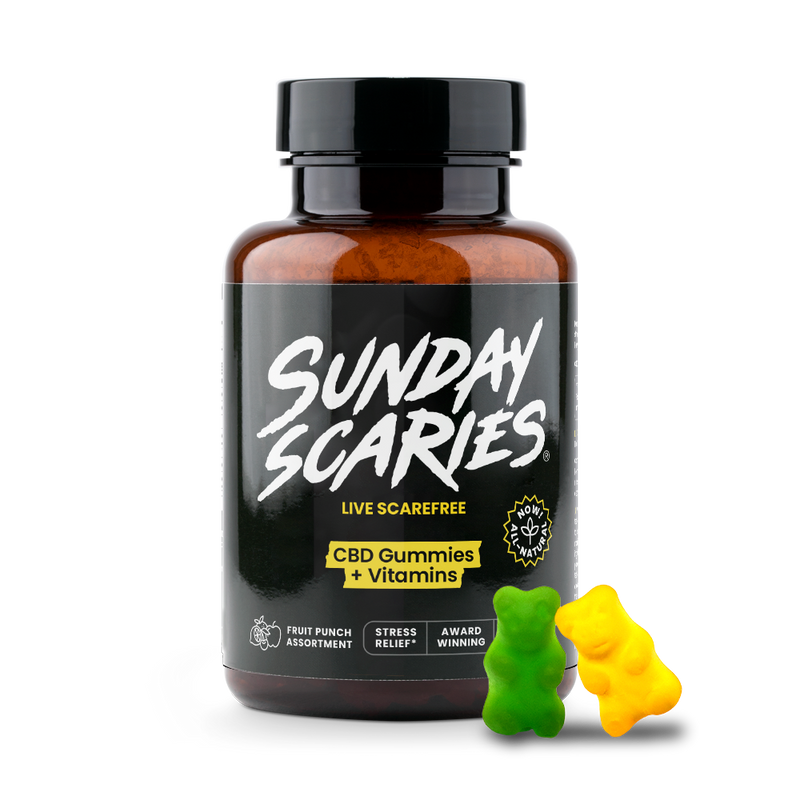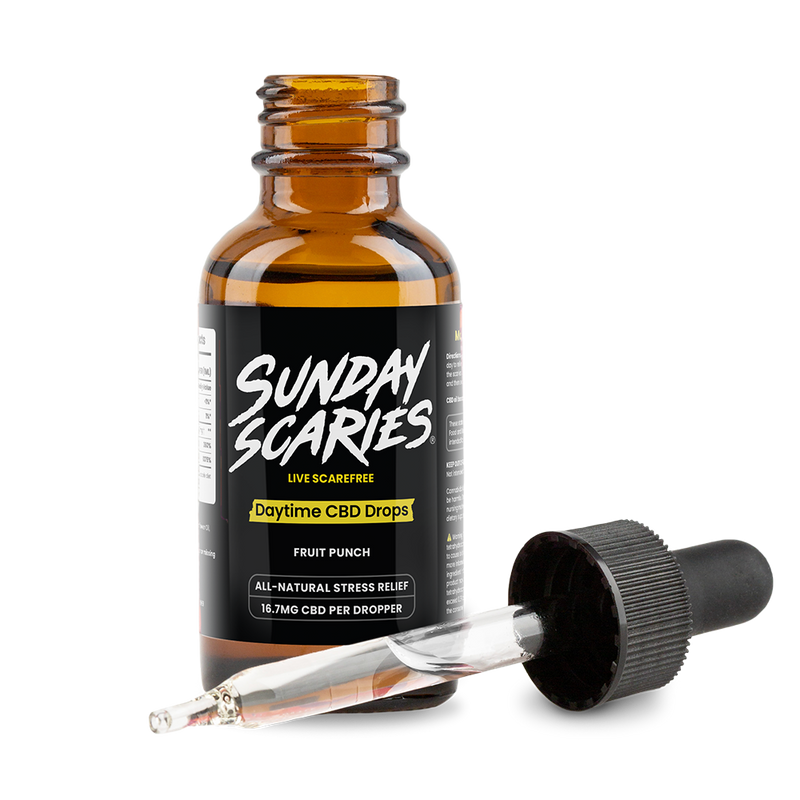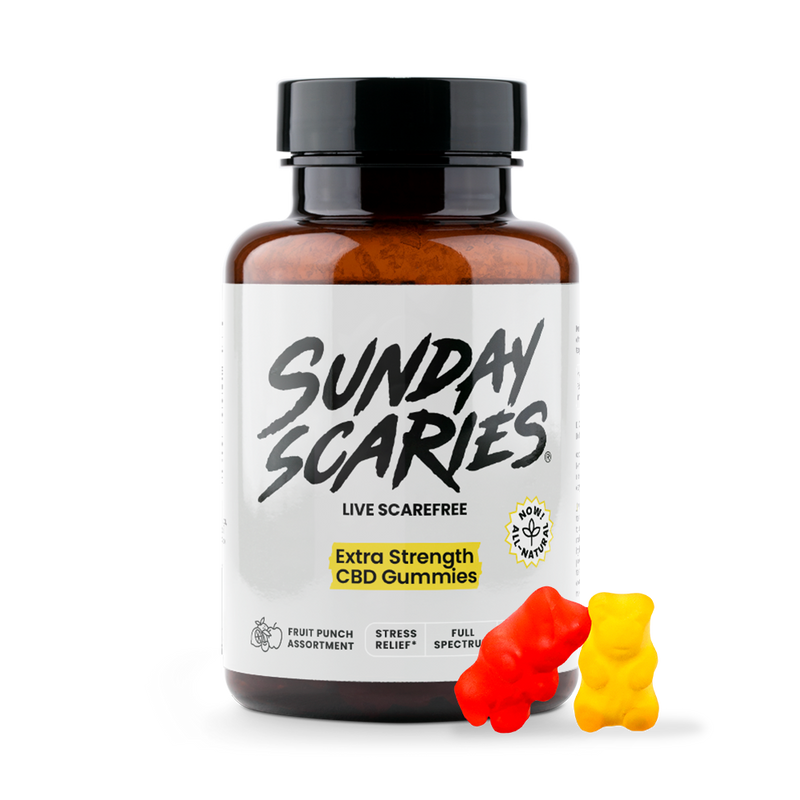



CBD (cannabidiol) is a non-intoxicating compound from the hemp plant. It won't get you high like THC, but it can take the edge off stress, calm racing thoughts, and support sleep by working with your body's own endocannabinoid system.
It's federally legal when hemp-derived with under 0.3% THC, and it comes in oils, gummies, and more.
CBD is in everything now. Lattes, dog treats, pillow sprays, your aunt's Facebook posts, gas-station checkout lines next to the beef jerky. It's the wellness world's main character.
And yet if you stopped ten people buying it and asked what it actually is, you'd get ten different answers, most of them wrong, and at least one involving the word "weed."
So let's fix that, minus the yoga-retreat language and the miracle-cure nonsense. Here's what CBD really is, how it works inside you, what it can and can't do, and how to buy a version that isn't overpriced sugar.
Consider this your no-hype field guide to the calm cannabinoid.
Quick Takeaways
- CBD (cannabidiol) is a non-intoxicating compound from hemp. It will not get you high.
- It works with your endocannabinoid system, the body's internal balance network, and serotonin pathways tied to calm.
- People use it mainly to take the edge off stress, quiet racing thoughts, and support sleep.
- It's federally legal in the US when hemp-derived with under 0.3% THC (the 2018 Farm Bill).
- Quality varies wildly. A third-party lab report (COA) is the single best thing to check.
What Is CBD, Exactly? (Minus the Marketing)
CBD, short for cannabidiol, is one of over 100 compounds (cannabinoids) found in the cannabis plant. Hemp-derived CBD comes from hemp, a cannabis variety bred to be high in CBD and very low in THC. It's non-intoxicating, so it offers the calm without the high.

Cannabis makes a whole cast of cannabinoids. The two famous ones are THC (the one that gets you high) and CBD (the one that doesn't).
Most CBD products are made from hemp, legally defined as cannabis containing under 0.3% THC, which is why a CBD gummy can take the edge off without sending you to the moon.
That "non-intoxicating" part is the headline.
CBD is the cannabinoid you can take and still run a meeting, drive carpool, or finish your inbox. It's wellness, not recreation. If you want the full sibling rivalry, we break it down in CBD vs THC.
Will CBD Get You High? (No, That's Its Whole Thing)
No. CBD is non-intoxicating and will not get you high. The high from cannabis comes from THC binding to the brain's CB1 receptor. CBD barely interacts with that receptor, so it produces calm without intoxication.

This is the question everyone secretly wants answered first, so: no high, no buzz, no impairment.
THC fits the CB1 receptor like a key in a lock and flips the "high" switch. CBD doesn't fit that lock the same way, so it skips the intoxication entirely.
What you may feel instead is subtle, a loosening of tension, a quieter head. We describe that sensation in detail in what does CBD feel like.
It basically subtracts stress, it doesn't give you a high.
How Does CBD Actually Work? Meet Your Endocannabinoid System
CBD works mainly through your endocannabinoid system (ECS), a network that helps regulate mood, sleep, stress, and more. Rather than forcing a single effect, CBD nudges this system toward balance, and it also touches serotonin receptors linked to calm.
Here's the bit most blogs skip, but I think it's the most interesting part.
You have a built-in system called the endocannabinoid system, a web of receptors and your own natural "endocannabinoids" that helps keep things like mood, sleep, appetite, and stress in balance.
You make cannabinoids in-house; CBD just works alongside them.
CBD doesn't slam into one receptor and force an effect. It works more like a dimmer than a switch, gently influencing the ECS toward equilibrium.
It also interacts with the 5-HT1A serotonin receptor, the same system several anti-anxiety medications target, which helps explain why the effect shows up as "less edge" rather than a high.
That mechanism is why CBD is studied for stress and sleep specifically, and why it feels calming rather than intoxicating.
What Do People Actually Use CBD For?
Most people use CBD to take the edge off everyday stress, quiet racing thoughts, support better sleep, and ease minor aches after activity. The research is most developed for anxiety and sleep, though CBD is a wellness supplement, not a treatment for any condition.

The honest, real-world use cases, ranked by how much evidence backs them:
- Stress and anxiety. The most-studied use. A case series of 72 patients found that anxiety scores dropped within the first month for about 79% of them. It's why "take the edge off" is CBD's whole brand.
- Sleep. Often, via that same calming effect, it quietens the mental noise that keeps you up rather than sedating you.
- Everyday recovery. Many people use it for minor post-workout soreness, thanks to the anti-inflammatory interest in research.
- General balance. A daily "get out of your own head" supplement for the chronically wound-up.
A necessary reality check: CBD is a supplement, not medicine.
It does not cure, treat, or heal disease, and the one FDA-approved CBD drug (Epidiolex) is for specific rare seizure conditions, not the gummies on a shelf.
Keep your expectations in the "supports and eases" lane, not the "fixes" lane.
Full Spectrum, Broad Spectrum, Isolate: The Only Cheat Sheet You Need
Full spectrum contains all hemp compounds, including trace THC. Broad spectrum keeps the supporting compounds but removes THC. Isolate is pure CBD only. Full spectrum may offer the strongest "entourage effect"; broad spectrum and isolate are safest for avoiding THC.
These three words cause endless confusion, so here's the whole thing in one table:
| Type | What's in it | Best for |
|---|---|---|
| Full spectrum | All hemp compounds + trace THC (under 0.3%) | Maximum "entourage effect"; fine if THC isn't a concern |
| Broad spectrum | Many compounds, THC removed | THC-free with some entourage benefit |
| Isolate | Pure CBD only | Total THC avoidance, no taste |
The "entourage effect" (the idea that hemp's compounds work better together) is a popular theory, not a proven fact, so don't treat full spectrum as automatically superior.
We go deeper for one common use case in full-spectrum vs. broad-spectrum CBD for sleep.
Is CBD Safe? What the Research Says
CBD is generally well-tolerated. The World Health Organization has reported a good safety profile with no abuse potential. Side effects are usually mild (dry mouth, drowsiness, occasional digestive upset), and the main cautions are drug interactions and pregnancy.
On safety, CBD has a reassuring track record. The World Health Organization's 2018 review concluded that CBD is generally well-tolerated with a good safety profile and no evidence of abuse or dependence potential.
Most side effects are mild: dry mouth, some drowsiness at higher doses, and occasionally an upset stomach.
Some real cautions to consider, however.
CBD can interact with certain medications (it affects the same liver enzymes that process many drugs; the "grapefruit warning" applies), and it isn't recommended during pregnancy or breastfeeding.
If you take prescription meds, a two-minute chat with your pharmacist is the move.
Is CBD Legal?
Hemp-derived CBD with under 0.3% THC is federally legal in the US under the 2018 Farm Bill, though state rules vary and a major federal change takes effect in November 2026. CBD from marijuana (higher THC) is treated as cannabis and is restricted to state programs.
The 2018 Farm Bill federally legalized hemp and hemp-derived CBD under that 0.3% THC threshold, which is what put CBD in every store.
State laws still vary, and the landscape is actively shifting: in November 2025, Congress passed a federal hemp overhaul — taking effect November 12, 2026 — that redefines hemp using total THC and caps finished products at 0.4 mg of total THC per container, a limit strict enough to reach many full-spectrum CBD products, not just intoxicating ones.
We cover the nuances in is CBD federally legal. As always, this is general information, not legal advice.
How to Pick a CBD Product Without Getting Ripped Off
Look for a third-party Certificate of Analysis (COA), a clear CBD dose in milligrams, the spectrum type, and a reputable brand. The COA is non-negotiable. It confirms the CBD content and screens for THC and contaminants.
The CBD market is part wellness, part Wild West, so protect yourself with a short checklist:
- Demand a COA. A third-party lab report proves what's actually in the bottle. No COA, no sale.
- Check the dose. Look for CBD in milligrams per serving, not vague "hemp extract" claims.
- Know your spectrum. Full, broad, or isolate, based on your THC comfort and testing situation.
- Start low. Begin with a modest dose, give it consistent time, and adjust. New to dosing? See how many CBD gummies should I eat.
The Bottom Line
CBD is the calm cannabinoid: a non-intoxicating compound from hemp that works with your body's endocannabinoid system to take the edge off stress, quiet the racing thoughts, and support sleep, all without a high.
It's federally legal when hemp-derived under 0.3% THC, it's well tolerated, and it's genuinely useful for the chronically wound-up, as long as you treat it as a supplement, not a miracle cure.
The single smartest move when buying?
Check the lab report. Everything else is details.

Take the edge off
CBD Gummies for Stress
Our #1 full-spectrum CBD gummies for everyday stress, made to quiet the scaries and keep you clear-headed. No high, just calm.
Shop CBD Gummies for Stress Backed by our 100% money-back guarantee.Frequently Asked Questions
What is CBD and what does it do?
CBD (cannabidiol) is a non-intoxicating compound from hemp. It works with your endocannabinoid system to take the edge off stress, calm racing thoughts, and support sleep, without producing a high.
Does CBD get you high?
No. CBD is non-intoxicating. The high from cannabis comes from THC. CBD barely interacts with the brain receptor responsible for that high, so it calms without intoxicating you.
Is CBD legal?
Hemp-derived CBD with under 0.3% THC is federally legal in the US under the 2018 Farm Bill, though state laws vary and are shifting. CBD from higher-THC marijuana is restricted to state cannabis programs.
Is CBD safe?
It's generally well tolerated, with the World Health Organization noting a good safety profile and no abuse potential. Side effects are usually mild. The main cautions are drug interactions and use during pregnancy.
How much CBD should I take?
Start low (many gummies are 10 to 25mg), stay consistent, and adjust based on how you respond. Dosing is individual, so give it time rather than chasing a bigger effect immediately.
What's the difference between CBD and THC?
CBD is non-intoxicating and calming; THC is intoxicating and gets you high. They come from the same plant family but affect the body very differently.
Ready to actually feel the calm, not just read about it?
Our CBD Gummies for Stress are an easy, lab-tested place to start, backed by a 100% money-back guarantee.
CBD Gummies for StressThese statements have not been evaluated by the Food and Drug Administration. This product is not intended to diagnose, treat, cure, or prevent any disease.