


Here's the uncomfortable truth most "best CBD for appetite" lists won't tell you: CBD on its own is not a reliable appetite stimulant. The cannabinoid famous for the "munchies" is THC, not CBD. Where CBD can help is indirectly, by calming the stress, anxiety, or nausea that kills your appetite in the first place. So the "best" CBD for appetite is the one aimed at your actual blocker, not a magic hunger switch.
You typed "best CBD to increase appetite" into Google, and you got a tidy ranked list of gummies, each promising to bring your hunger roaring back.
Most of those lists are built on a shaky premise. They've quietly swapped what the research says about THC onto CBD and hoped you wouldn't notice. So before you buy anything, let's do the thing the listicles skip: figure out whether CBD actually does what you want, and if not, what does.
This is going to be more useful than a ranked list, I promise. Because if appetite is your goal, knowing which cannabinoid does what will save you money and disappointment.
Quick Takeaways
- CBD is not a direct appetite stimulant. THC is the cannabinoid that drives the classic "munchies."
- THC works by activating CB1 receptors and boosting ghrelin, your main hunger hormone. CBD barely touches CB1.
- In some research, CBD slightly reduces appetite. The prescription CBD drug Epidiolex even lists decreased appetite as a common side effect.
- CBD can still help indirectly: if stress, anxiety, or nausea is suppressing your appetite, calming that may let hunger return.
- CBG (a different hemp cannabinoid) is the one with actual appetite-stimulant research, though so far only in animals.
Does CBD increase appetite?
Not directly. CBD does not reliably stimulate appetite the way THC does, and in some studies it slightly suppresses it. If your appetite loss is driven by stress or nausea, CBD may help indirectly, but it is not a hunger switch.

This is the headline, and it's worth sitting with, because almost every "best CBD for appetite" roundup gets it backward.
The appetite-boosting reputation of cannabis comes almost entirely from THC. When researchers and doctors talk about cannabis stimulating appetite (in chemotherapy patients, for example), they're talking about THC and THC-based medications, not CBD.
CBD is a different molecule with a different job. It interacts with your endocannabinoid system in a much more roundabout way, and it doesn't flip the hunger circuits that THC does.
In fact, the clearest real-world data point we have cuts the other direction: Epidiolex, the FDA-approved purified CBD medication, lists decreased appetite among its common side effects.
So if a brand tells you their CBD gummy will make you ravenous, treat that with the same suspicion you'd treat any too-good claim.
Why does THC increase appetite, but CBD doesn't?
It comes down to one receptor. THC activates the CB1 receptor in your brain and ramps up ghrelin, the hormone that tells you you're hungry. CBD doesn't meaningfully activate CB1, so it never triggers that hunger cascade.

The mechanism here is genuinely well mapped, which is rare in cannabinoid science, so it's worth understanding.
CB1 is a receptor in your brain and gut that sits at the center of appetite regulation. THC fits into it like a key. Once THC activates CB1, it kicks off a chain of effects: food smells better, food tastes better, and your hunger hormone climbs.
That hunger hormone is ghrelin, and the link is direct.
In a study published in British Journal of Pharmacology, blocking the CB1 receptor blocked ghrelin's ability to drive eating.
esearchers went further with CB1-knockout mice (animals bred without the receptor): in those animals, ghrelin lost its appetite-stimulating power entirely. No CB1, no munchies.
Here's the part that matters for you: CBD doesn't significantly activate CB1. It's not the key that fits that lock. So the entire THC-to-CB1-to-ghrelin pathway, the one responsible for the munchies, mostly doesn't fire with CBD.
That's not a flaw in CBD. It's just not what CBD is for.
Can CBD help your appetite indirectly?
Yes, and this is the real case for CBD. If your appetite is suppressed by stress, anxiety, or nausea, CBD may ease those, and your appetite can return on its own. It's removing a roadblock, not pressing the gas.
This is where the honest "best CBD for appetite" conversation actually lives, and it's more useful than the hunger-switch fantasy.
Think about why your appetite drops. For a lot of people, it's not a broken hunger system. It's everything sitting on top of it:
- Stress and anxiety. A churning stomach and a racing mind are appetite killers. CBD is most studied for its calming, anxiety-easing effects, and a calmer nervous system is one that lets you eat.
- Nausea. Queasiness shuts appetite down fast. Cannabinoids are studied in nausea pathways, and easing nausea can clear the way for hunger.
- Poor sleep. Wrecked sleep scrambles hunger hormones. If CBD helps you sleep, that can knock on to a steadier appetite.
So the logic is indirect but real: CBD doesn't make you hungry, it may remove the thing that's making you not hungry.
If your appetite loss is anxiety-driven, a CBD product aimed at stress is the sensible pick.
We get into how that calm feeling actually works in what does CBD feel like.
What about CBG for appetite?
CBG, a lesser-known hemp cannabinoid, is the one with actual appetite-stimulant research, though so far only in animals. In a 2016 study, CBG meaningfully increased feeding in rats without the side effects of other appetite drugs.

If you want the cannabinoid that genuinely looks promising for appetite (and isn't THC), it's CBG, not CBD.
In a study led by Daniel Brierley and colleagues, published in Psychopharmacology (2016), CBG was given to already-fed ("pre-satiated") rats. At 120 and 240 mg/kg, the rats ate more meals, and at the higher dose they started eating sooner. The researchers called CBG a "novel, well-tolerated appetite stimulant," notable because it did this without the sedation or other side effects seen with some appetite drugs.
Two honest caveats, because this is exactly where hype usually takes over:
- This is animal research. Rats are a starting point, not proof it works the same in people. Human trials on CBG and appetite aren't there yet.
- CBG is non-psychoactive, so it won't get you high like THC, but the appetite evidence is early.
It's a promising lead worth knowing about, not a finished answer. If you see a product marketing CBG as a guaranteed appetite fix, the science doesn't support that level of confidence yet. Curious about the cannabinoid itself? Here's the primer on what CBG is.
So what's the "best CBD" to increase appetite?
The best choice depends on what's blocking your appetite. For stress- or anxiety-driven appetite loss, a quality full-spectrum CBD aimed at calm is the smart pick. For the direct "munchies" effect, that's THC's territory, not CBD's. Match the product to the cause.
Here's how the main hemp cannabinoids actually stack up for appetite, so you can choose with clear eyes:
| Cannabinoid | Effect on appetite | Evidence | Gets you high? |
|---|---|---|---|
| THC | Directly stimulates appetite (the "munchies") | Strong, including human data | Yes |
| CBD | No direct stimulation; may help indirectly via stress/nausea; can mildly suppress | Indirect/mixed | No |
| CBG | Stimulated feeding in animal studies | Early, animal-only | No |
A few buying principles that hold up regardless of which you choose:
- Match the product to the blocker. Appetite gone because you're wound up? Go for a calm-focused CBD. Want the literal hunger boost? That's a THC conversation, with all the legal and "do you actually want to be high" considerations that brings.
- Full-spectrum over isolate, usually. A full-spectrum extract includes the supporting cast of minor cannabinoids and terpenes, which many people prefer for a more rounded effect.
- Demand a published lab report. A third-party Certificate of Analysis tells you what's actually in the bottle. No COA, no sale.
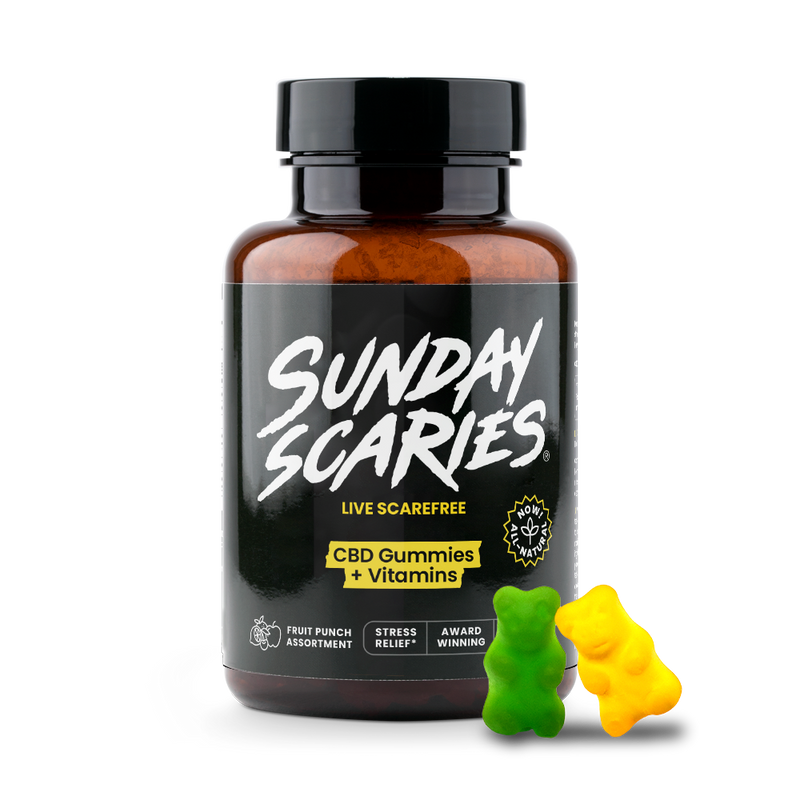
If stress is the thing standing between you and a normal appetite, our CBD Gummies for Stress are built for exactly that calm-the-system job, and they come with a 100% money-back guarantee so trying them is risk-free.
When appetite loss is something to take to a doctor
Persistent or unexplained appetite loss isn't a supplement problem, it's a medical one. If you've lost your appetite for more than a couple of weeks, are losing weight without trying, or it comes with other symptoms, see a doctor before reaching for any cannabinoid.
This part isn't a disclaimer to skim. Appetite is one of the body's status lights, and a sustained drop can signal something that needs real attention, from thyroid issues to depression to medication side effects.
CBD is a wellness product, not a treatment for any of that. If your appetite loss is significant, ongoing, or paired with other symptoms, the responsible move is a conversation with a healthcare professional first.
Use CBD for what it's good at (taking the edge off stress), not as a substitute for figuring out a real underlying cause.
The bottom line
The "best CBD to increase appetite" is a bit of a trick question, and now you know why. CBD isn't a direct appetite stimulant; that's THC's department, working through CB1 and ghrelin.
What CBD can do is clear the stress, anxiety, or nausea that's been sitting on your appetite, which lets normal hunger come back on its own. CBG is the one to watch for direct appetite effects, but the evidence is still early and animal-only.
So skip the products promising a hunger switch, pick a quality CBD aimed at whatever's actually blocking you, and if your appetite loss is serious or lasting, talk to a doctor first.

Calm the system down
CBD Gummies for Stress
If stress or anxiety is sitting on your appetite, this is the calm-the-system job. Full-spectrum CBD with a published lab report.
Shop CBD for Stress Backed by our 100% money-back guarantee.Frequently Asked Questions
Does CBD make you hungry like THC?
No. THC is the cannabinoid that triggers the "munchies" by activating CB1 receptors and raising ghrelin. CBD doesn't meaningfully activate CB1, so it doesn't directly stimulate hunger and may even slightly reduce appetite in some cases.
Can CBD help if I've lost my appetite from stress?
It may, indirectly. CBD is most studied for easing stress and anxiety, and since those often suppress appetite, calming them can let your hunger return. It's removing a blocker rather than directly boosting hunger.
Which cannabinoid is best for appetite?
For a direct appetite boost, THC has the strongest evidence. Among non-intoxicating options, CBG showed promise in animal studies. CBD works only indirectly, by easing stress or nausea.
Will CBD make me lose my appetite?
For most people CBD doesn't dramatically change appetite either way, but some research and the prescription CBD drug Epidiolex note decreased appetite as a possible effect. If you notice it, lower your dose or talk to your doctor.
What's the best CBD product for appetite?
The one matched to your blocker. If stress or anxiety is killing your appetite, a calm-focused full-spectrum CBD with a published lab report is the sensible choice. There's no CBD product that works as a guaranteed hunger switch.
Is CBG better than CBD for appetite?
For appetite specifically, CBG has more direct (though early, animal-only) evidence. CBD's role is indirect. Neither is a proven human appetite treatment, so keep expectations realistic.
If stress is killing your appetite, start there.
Our CBD Gummies for Stress are made to calm the system down, backed by a 100% money-back guarantee.
CBD Gummies for StressThese statements have not been evaluated by the Food and Drug Administration. This product is not intended to diagnose, treat, cure, or prevent any disease.