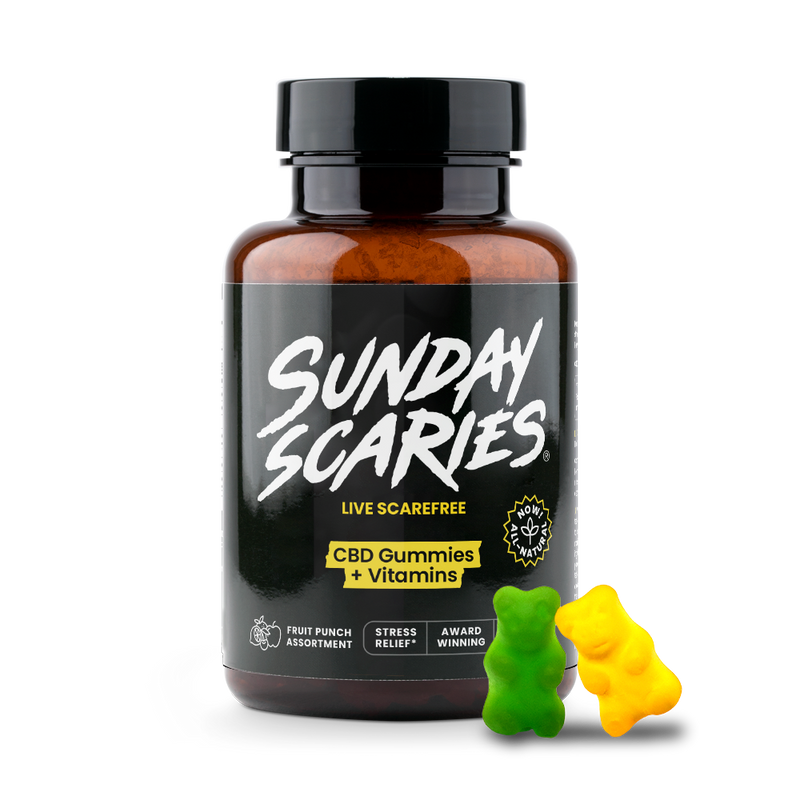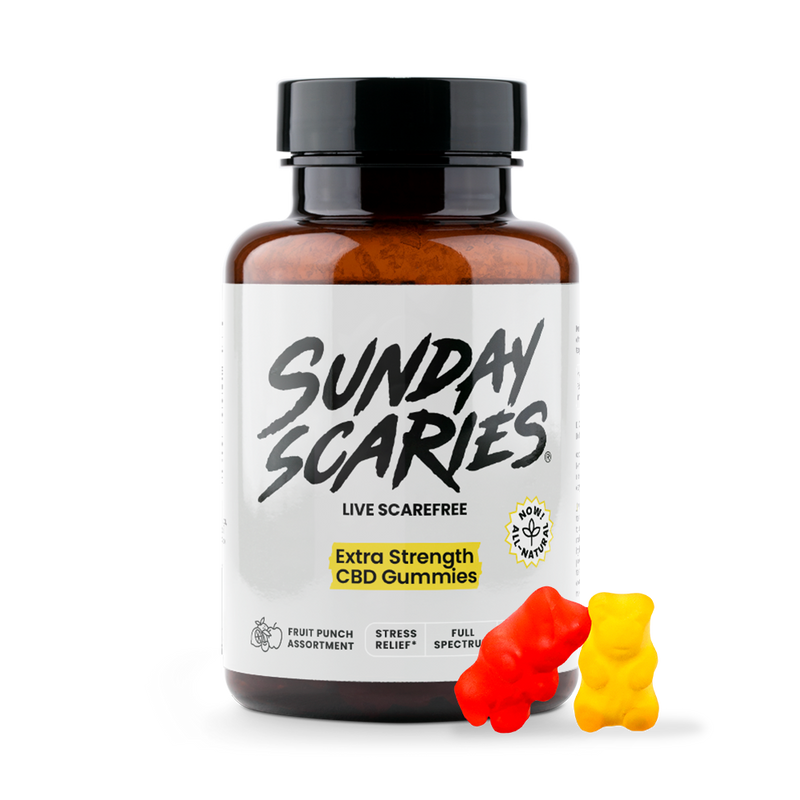



Standard drug tests look for THC, not CBD, so CBD itself isn't what they flag. The catch is THC, and full-spectrum CBD, including ours, contains a trace of it that can build up with regular use and trigger a positive. No CBD product is a guaranteed pass, so if you're tested, the only sure move is to skip cannabinoid gummies before your screening.
You found a CBD gummy that finally takes the edge off your workday. Then a thought hits you in the parking lot before a random screening: wait, is this thing about to cost me my job?
Fair question, and the answer is mostly good news with one real asterisk. Drug tests aren't hunting for CBD.
They're hunting for THC.
So whether your CBD lands you in trouble depends entirely on what else is in the bottle. Here's exactly how that works, who's actually at risk, and how to keep your calm habit from blowing up your next test.
Quick Takeaways
- Standard drug tests screen for THC, not CBD, so CBD itself isn't what they flag.
- The risk is the trace THC in full-spectrum CBD, including ours, which can accumulate with regular use.
- A real study found that after full-spectrum CBD use, some people tested positive for THC.
- No CBD product is a guaranteed pass. If a clean test is essential, don't take cannabinoid gummies beforehand.
- THC stays detectable in urine for roughly 3 to 30 days, depending on use.
Does CBD itself show up on a drug test?
Not on a standard test. They're built to detect THC and its metabolites, not CBD, so the molecule itself isn't what gets flagged. The problem is any THC riding along with it, and some expanded panels screen for other cannabinoids too.
This is the part that should lower your heart rate: standard drug tests aren't designed to find CBD. They look for THC, the intoxicating cannabinoid. On a typical panel, CBD itself isn't on the menu.
That covers the standard test, but it doesn't make any CBD product a guaranteed pass. Labels are often wrong, trace THC slips into products marketed as "THC-free," and some expanded panels screen for other cannabinoids. The bigger risk starts with full-spectrum, which is what we make.
Why can full-spectrum CBD make you fail?
Because full-spectrum CBD legally contains a trace of THC (under 0.3%). It's a tiny amount, but with regular daily use, THC and its metabolites can accumulate in your body and cross the threshold a test flags as positive.
Here's the mechanism. Full-spectrum products, ours included, keep all the hemp compounds, including a legal sliver of THC. One gummy's worth is trivial. But take it daily for weeks, and that THC can build up.
Quest Diagnostics flagged exactly this: in a small study, after using full-spectrum CBD, several of 15 people tested positive for THC while others didn't.
That split is the scary part.
The same product produced positives for some users and not others, because accumulation depends on your dose, frequency, metabolism, and body.
You can't reliably predict which group you'll be in, which is why "it's under the legal limit" is cold comfort if you're the one explaining a positive to HR.
How long does THC from CBD stay in your system?
It varies by test and usage. Urine tests (the most common) can detect THC metabolites for about 3 to 30 days. Saliva tests, roughly 1 to 3 days. Hair tests, up to 90 days. Heavier, more frequent use means longer detection.
The detection windows, since this is what people actually worry about:
| Test type | THC detection window |
|---|---|
| Urine (most common) | ~3 to 30 days |
| Saliva | ~1 to 3 days |
| Hair | up to 90 days |
These ranges widen with heavier use because THC is fat-soluble and lingers. So a daily full-spectrum habit sits at the riskier end of every window.
Can you take CBD and still pass a drug test?
There's no CBD product we'd call a guaranteed pass. THC-free options like broad-spectrum or isolate carry less THC risk than full-spectrum, but labels are often wrong and some panels screen for other cannabinoids, so the only reliable move when a test is on the line is to stop taking cannabinoid gummies beforehand.
The playbook for the drug-tested crowd:
- Know what you're taking. Full-spectrum, like our gummies, contains THC. Broad-spectrum and isolate contain less or none, but "less" is not "zero risk."
- Demand a COA. A third-party lab report is the only way to see the actual THC content. "THC-free" on a label means nothing without the receipt, and even then, panels vary.
- Mind cross-contamination. Cheap brands sometimes have more THC than labeled, and some tests screen for cannabinoids beyond THC.
- When it's make-or-break, don't risk it. If a clean test matters, stop cannabinoid products well ahead of it. That's the only move with no asterisk.
For the broader full-versus-broad breakdown, see full spectrum vs broad spectrum CBD for sleep, and the cannabinoid basics in CBD vs THC.
The bottom line
CBD itself isn't what a standard test looks for, but the THC in full-spectrum products is, and our gummies are full-spectrum. With daily use, that risk is real rather than theoretical.
It's the THC, not the CBD, doing the damage, and that accumulation is unpredictable from person to person. No CBD product is a guaranteed pass.
So if your job, sport, or peace of mind depends on a clean test, the safe move is to not take cannabinoid gummies before it. Save the calm for the days a test isn't on the table.

Take the edge off
CBD Gummies for Stress
Our #1 full-spectrum CBD gummies for everyday stress, made to quiet the scaries and keep you clear-headed. No high, just calm. Full-spectrum means they contain THC, so save them for the days a drug test isn't on the table.
Shop CBD Gummies for Stress Backed by our 100% money-back guarantee.Frequently Asked Questions
Will CBD make me fail a drug test?
Standard tests screen for THC, not CBD, so CBD itself isn't what they flag. But full-spectrum CBD like ours contains trace THC that can build up with regular use and trigger a positive, and no CBD product is a guaranteed pass. If you're tested, don't take cannabinoid gummies beforehand.
Does full-spectrum CBD have enough THC to test positive?
It can. The THC is under 0.3%, but regular daily use lets it accumulate. A Quest Diagnostics study found some full-spectrum users tested positive while others didn't, so the risk is real but variable.
How long does THC from CBD stay in your system?
Urine tests can detect THC for about 3 to 30 days, saliva for 1 to 3 days, and hair for up to 90 days. Heavier, more frequent use extends those windows.
Is any CBD safe for drug tests?
No CBD product is a guaranteed pass. Broad-spectrum and isolate carry less THC risk than full-spectrum, but labels are often wrong and some panels screen for other cannabinoids. If a clean test is essential, the only sure move is to skip cannabinoid products beforehand.
Can you fail a drug test from CBD oil?
Yes, if it contains THC, and full-spectrum CBD oil does in trace amounts. Broad-spectrum or isolate oils carry less risk but not zero, since labels can be wrong and panels vary. Always check the COA, and skip it before a test that matters.
Calm for the days that count.
Our CBD Gummies for Stress are full-spectrum, so if a clean test is on the horizon, save them for after. When it's not, they're here to quiet the scaries, backed by a 100% money-back guarantee.
CBD Gummies for StressThe Food and Drug Administration has not evaluated these statements. This product is not intended to diagnose, treat, cure, or prevent any disease.