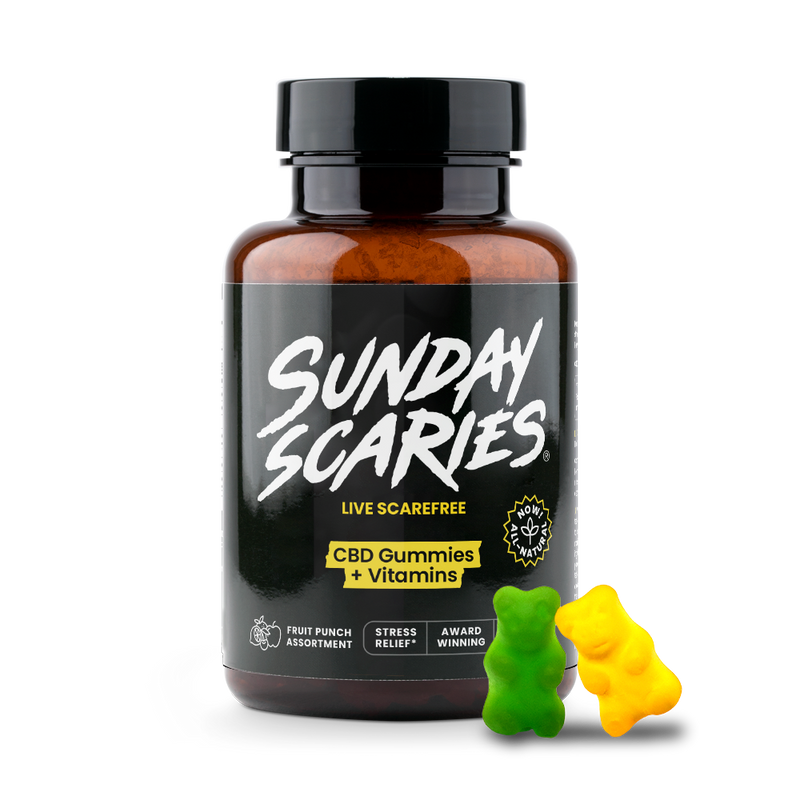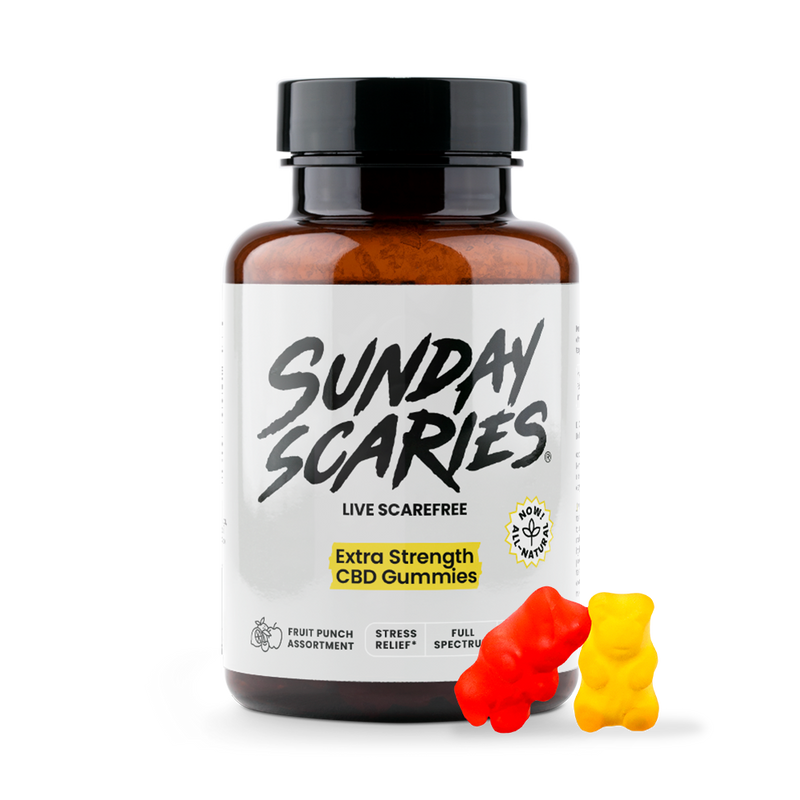



You took CBD gummies to feel calmer, not to sweat a drug test. But then you read the label, saw "full-spectrum," and now you're wondering: is there THC in these, and if so, how long is it going to hang around in me?
The answer is probably more reassuring than you'd think, with one real exception.
The CBD itself won't show on a standard drug test, tests look for THC, not CBD. The catch is the trace THC in full-spectrum gummies.
With occasional use that trace usually clears in a few days; with heavy daily use it can build up and linger for weeks. Broad-spectrum and isolate gummies carry far less THC, but no CBD product is a guaranteed pass, so if a test matters the safe move is to skip cannabinoid gummies beforehand.
Here's exactly what's in your gummies, how long that trace THC sticks around, and how to stay clear of a surprise.
Quick Takeaways
- Standard drug tests screen for THC, not CBD, so CBD on its own isn't what they flag.
- Full-spectrum CBD gummies contain a trace of THC (under 0.3%) that can accumulate with heavy use.
- Occasional use usually clears in a few days; heavy daily use can linger for weeks.
- Broad-spectrum and isolate gummies carry far less THC, but no CBD product is a guaranteed pass.
- Labels can be wrong and some panels screen all cannabinoids, so if a test matters, don't take cannabinoid gummies beforehand.
First, It's Not the CBD Tests Are Looking For

Standard drug tests don't screen for CBD at all, they look for THC and its metabolite, THC-COOH.
This is the key thing that calms most of the worry. CBD is non-intoxicating and isn't on a typical panel.
NIH's MedlinePlus toxicology reference lists tetrahydrocannabinol (THC), not CBD, as the cannabis compound a screen detects.
So if your gummy were pure CBD with zero THC, a standard drug test wouldn't flag it. The whole question really comes down to one thing: how much THC, if any, rode along with your CBD, with the small asterisk that a few expanded panels do look for other cannabinoids.
The Real Variable: Which Type of CBD Gummy You Have
Whether there's THC to detect depends largely on the type of CBD gummy.
| Type | THC content | Drug-test risk |
|---|---|---|
| Full-spectrum | Trace (under 0.3%) | Possible with heavy, regular use |
| Broad-spectrum | THC removed (ND) | Lower, but not zero |
| CBD isolate | Zero THC | Lowest, but not a guaranteed pass |
Full-spectrum: the one to think about
Full-spectrum gummies keep the whole hemp profile, including a small amount of naturally occurring THC. One gummy's trace won't get you high or, on its own, likely fail a test.
But taken daily, that trace can slowly build up in your body and, for some people, cross the threshold for a positive.
Broad-spectrum and isolate: the lower-risk types
Broad-spectrum has the THC stripped out (usually shown as "ND," none detected, on the lab report), and isolate is pure CBD. If keeping your THC exposure down is the priority, these are the types to lean toward.
Just know that "lower risk" isn't "no risk": labels are wrong more often than you'd think, and some panels screen for all cannabinoids, so none of these is a guaranteed pass. Confirm with the COA, and if a test really matters, don't take it beforehand.
So How Long Does That Trace THC Stay in Your System?
If you're using full-spectrum, the trace THC follows the same clearance rules as any THC: days for occasional users, up to weeks for heavy daily users.
THC is fat-soluble, so it's stored in body fat and released slowly. With a light, occasional full-spectrum habit, there's very little to accumulate, so it typically clears within a few days.
Use it daily for a long stretch, and the trace can build, extending the detection window. For very heavy, long-term intake, NIH notes THC can be detectable "up to 6 to 11 weeks," though that reflects high-dose THC use, not a light CBD routine.
| Full-spectrum use pattern | Rough urine detection window |
|---|---|
| Occasional / light | A few days |
| Daily, moderate | Up to about a week or more |
| Heavy, long-term | Can extend to weeks |
For the full detection breakdown by test type, see how long THC gummies stay in your system.
The label is a claim, the COA is proof
Studies have repeatedly found CBD products mislabeled, some with more THC than stated.
A gummy marked "THC-free" is only as trustworthy as the third-party Certificate of Analysis behind it, and even a clean COA can't account for an expanded panel that screens all cannabinoids. If a test is on the line, read the THC line on the COA yourself, and when it really counts, don't take it beforehand.
How to Avoid a CBD Drug-Test Surprise

A few simple choices take most of the risk off the table, and one move takes all of it off.
Do this
- If a test really matters, stop taking cannabinoid gummies well ahead of it. That's the only sure move.
- Otherwise, lean toward broad-spectrum or isolate to keep THC exposure low.
- Check the COA and confirm THC reads "ND."
- Buy from brands that publish lab results.
Don't rely on
- A "THC-free" label or ND result as a guaranteed pass.
- "It's only CBD" as an excuse after a positive.
- Detox drinks to flush THC out fast.
- Mystery products with no dosing info or COA.
Calm you can verify
Our CBD gummies come with third-party lab results on every batch, so you always know exactly how much CBD (and how little else) you're getting.
How Long Does THC From CBD Gummies Stay in Your System? The Bottom Line
The CBD won't show up on a standard test. Any trace THC from a full-spectrum gummy clears in a few days for occasional users and can linger for weeks with heavy daily use, while broad-spectrum and isolate leave far less to detect, though none of them is a guaranteed pass.
If you're never tested, full-spectrum's trace THC is a non-issue. If you are, the only reliable move is to stop taking cannabinoid gummies well before the test. Leaning toward broad-spectrum or isolate and confirming "none detected" on the Certificate of Analysis lowers your risk, but it doesn't guarantee a pass.
Know your type, read the lab report, and don't gamble on a label when a clean test matters. For more, see do CBD gummies have THC.
Frequently Asked Questions
Do CBD gummies show up on a drug test?
CBD itself isn't what a standard test screens for, tests look for THC. Full-spectrum CBD gummies contain a trace of THC that can show up with heavy regular use, while broad-spectrum and isolate carry far less, though no CBD product is a guaranteed pass.
Does CBD show up as THC on a drug test?
No, CBD and THC are different molecules and CBD isn't what tests look for. A positive from a "CBD" product comes from actual trace THC in a full-spectrum formula, not from the CBD converting or being mistaken for THC.
How long does the THC in full-spectrum CBD gummies stay in your system?
Roughly a few days for occasional, light use, since there's little to accumulate. Heavy daily use can extend the window to a week or more, and for very heavy long-term intake THC can be detectable for weeks.
Will broad-spectrum or isolate CBD gummies make me fail a drug test?
They're less likely to than full-spectrum, since the THC is removed, but they're not a guaranteed pass. Labels can be wrong and some panels screen for all cannabinoids, so if a test matters, the safe move is to stop taking cannabinoid gummies beforehand.
Does CBD show up on a saliva, hair, or urine test?
CBD isn't the target of any of them, they look for THC. If your CBD product contains trace THC, that THC follows the usual windows: shortest for saliva, longer for urine, and longest for hair.
How can I be sure my CBD gummies are THC-free?
Check the third-party Certificate of Analysis and look for THC listed as "ND" (none detected). Since "THC-free" claims aren't tightly regulated, the lab report is the best confirmation, but keep in mind that THC-free still isn't a guarantee of passing an all-cannabinoid panel.
Know exactly what you're taking.
Our CBD Gummies are third-party lab tested, clearly labeled, and backed by a 100% money-back guarantee, so calm never comes with a question mark.
Shop CBD GummiesThese statements have not been evaluated by the Food and Drug Administration. This product is not intended to diagnose, treat, cure, or prevent any disease. This article is general information, not medical advice. Detection windows are general estimates and vary by individual; they are not a guarantee of passing or failing any test. Legal information is current as of 2026 and subject to change. Talk to a doctor before using CBD or THC if you have a health condition, are pregnant or nursing, or take other medications. Keep all hemp products away from children and pets.